

Blog

Teaching Gujarati When You Understand More Than You Speak
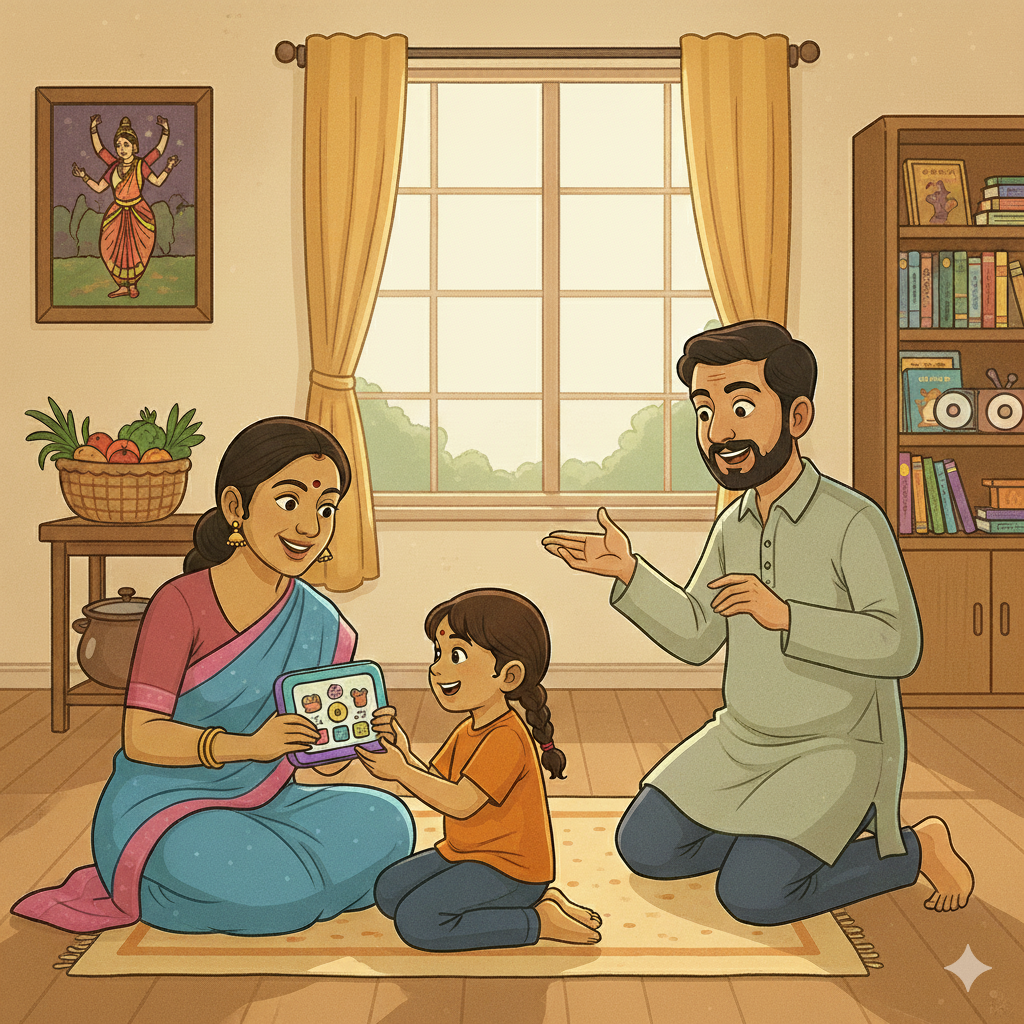
Many parents want their children to grow up speaking Gujarati, but what if you understand Gujarati well, yet struggle to speak it yourself? You’re not alone. This is a common situation for second-generation families, and the good news is: you can still raise a child who speaks Gujarati. Why This Challenge Happens Generational shift: You may have grown up hearing Gujarati from your parents or grandparents but used English at school. Confidence gap: You understand meaning, but forming sentences feels slow or awkward. Perfection trap: Parents sometimes avoid speaking for fear of making mistakes. The truth is, your child doesn’t need “perfect” Gujarati from you. They need consistency, exposure, and encouragement. 5 Practical Ways to Teach Gujarati 1. Speak What You Know — Consistently Even if it’s just a few phrases, use them daily. Repetition is powerful. Examples: “બેસો” (beso – sit down) “ખાઓ” (khāo – eat) “પાણી” (pāṇī – water) Your child learns from hearing the same words in natural settings. 2. Narrate in Gujarati + English If you know the Gujarati word, use it. If not, continue in English. Over time, you’ll learn together. Example at the park: “જુઓ, આ બર્ડ છે.” (Juō, ā bird che. – Look, this is a bird.) “તે ઊડી રહ્યો છે.” (Te ūḍī rahyo che. – It is flying.) This shows your child that Gujarati is part of normal speech, even when mixed. Learn Together With Your Child Turn the challenge into teamwork. Use flashcards, storybooks, or screen-free toys like the Gujarati Pad to explore vocabulary side by side. Kids love when parents say, “Let’s learn this together.” 4. Involve Fluent Relatives or Community Grandparents, cousins, or family friends can be invaluable. Encourage them to speak only Gujarati with your child. Even short weekly calls can build confidence. 5. Celebrate Progress, Not Perfection If your child replies in Gujarati, celebrate it, even if the grammar isn’t perfect. When you respond with joy, your child feels encouraged to keep trying. Final Thoughts You don’t need flawless Gujarati to give your child the gift of the language. By using the words you know, mixing English when needed, learning alongside your child, and involving community support, you create an environment where Gujarati feels alive and natural. Over time, you’ll improve together, and your child will carry the language forward with confidence. 👉 Ready to make Gujarati playful? Explore our Gujarati Pad and Dikku the Gujarati Elephant — screen-free companions designed to help families just like yours.
Learn more
My Child Answers in English: How to Keep Punjabi Going at Home
Every parent teaching Punjabi at home knows the moment: you speak in Punjabi, and your child answers in English. It can feel frustrating, but it’s normal. Children naturally lean toward the majority language they hear at school, from friends, or on TV. The good news is, there are simple strategies you can use every day to keep Punjabi alive and active in your home. Why Kids Switch to English Comfort zone: English becomes the default once school starts. Peer pressure: Kids want to fit in with classmates. Effort factor: Answering in Punjabi feels like extra work. This doesn’t mean your child is rejecting Punjabi. It’s simply easier for them. Your role is to make Punjabi equally easy and fun. 5 Strategies That Work 1. Stick With Punjabi (Even When They Reply in English) If your child answers in English, keep the conversation in Punjabi. Over time, this sets the expectation that Punjabi is part of family communication. ExampleParent: “ਤੂੰ ਖਾਣਾ ਖਾ ਲਿਆ?” (Did you eat?)Child: “Yes.”Parent: “ਚੰਗਾ, ਕੀ ਖਾਧਾ?” (Good, what did you eat?) You’re not scolding, just modeling consistency. 2. Create Daily Punjabi Routines Link Punjabi to specific times of day. For example: Breakfast = Punjabi only Car rides = Punjabi songs Bedtime = Punjabi story These little routines add up and make language use automatic. 3. Use Prompts, Not Quizzes Instead of asking your child to “say this in Punjabi,” try using natural prompts. Try this at mealtime: “ਆਲੂ ਕਿੱਥੇ ਹਨ?” (Where are the potatoes?) “ਕੀ ਤੈਨੂੰ ਪਾਣੀ ਚਾਹੀਦਾ ਹੈ?” (Do you want water?) These feel like real conversations, not tests. 4. Make Punjabi Playful Children learn best when they’re having fun. Use toys, songs, and playful tools. Act out actions: ਦੌੜਨਾ, ਛਾਲ ਮਾਰਨਾ, ਹੱਸਣਾ (run, jump, laugh). Sing classic rhymes in Punjabi. Use screen-free interactive toys like the Punjabi Pad or Babbu the Punjabi Elephant to make language practice feel like play. 5. Celebrate Every Word Even one Punjabi word in an English sentence is progress. Praise it. Over time, single words grow into phrases and full sentences. Final Thoughts Language isn’t learned overnight. It’s built through small, joyful interactions repeated every day. If your child answers in English, don’t worry, just keep Punjabi alive in your routines, in your play, and in your heart. And if you’d like a helping hand, explore our Punjabi Pad and Babbu the Punjabi Elephant : playful, screen-free companions designed to keep Punjabi alive at home.
Learn more
Discover the Magic of Interactive Language Learning Toys - Preserving Cultural Identity in Gujarati, Hindi, Punjabi, Tamil, Telugu, and Malayalam
In a globalized world where cultural diversity is celebrated, bilingualism becomes a bridge between the past and the future. It's a testament to the enduring legacy of cultural identity and the importance of preserving it for generations to come.
Learn more
Bilingual Bonds: Expanding Social Connections
Imagine attending multicultural gatherings or international events and being able to engage in conversations with ease. Bilingualism allows you to bridge gaps and create meaningful connections with individuals from diverse cultures.
Learn more
Bilingual Adventures: Enriching Travel Experiences
It's not just about words; it's about opening your heart to the world and forging connections that make your journeys truly unforgettable. Bilingualism is your passport to richer, more immersive travel experiences, where every conversation becomes an adventure in itself.
Learn more
Bilingual Brilliance: Building Cognitive Reserve
Research suggests that bilingualism may delay the onset of age-related cognitive decline by several years. The cognitive advantages developed through bilingualism, such as better problem-solving skills and mental flexibility, provide a buffer against cognitive decline.
Learn more
Bilingual Advantage: Boosting Adaptability
Bilingualism empowers you to confidently explore unfamiliar territories and interact with people from diverse backgrounds. It's like having a universal toolkit that allows you to thrive in the global village we call our world.
Learn more
Bilingual Brilliance: Elevating Your Communication Skills
Bilingual individuals have a knack for precision in expression. They choose words with finesse, both in their native and second languages. This linguistic dexterity makes them articulate and impactful communicators.
Learn more
Bilingual Bliss: How Multilingualism Fosters Stronger Cultural Awareness
Learning and using two languages can cultivate empathy and respect for different cultures. Bilingual individuals understand the power of language and the nuances it carries. This understanding can lead to more respectful and considerate interactions with people from diverse backgrounds.
Learn more